The most interesting story is usually one the company already knows
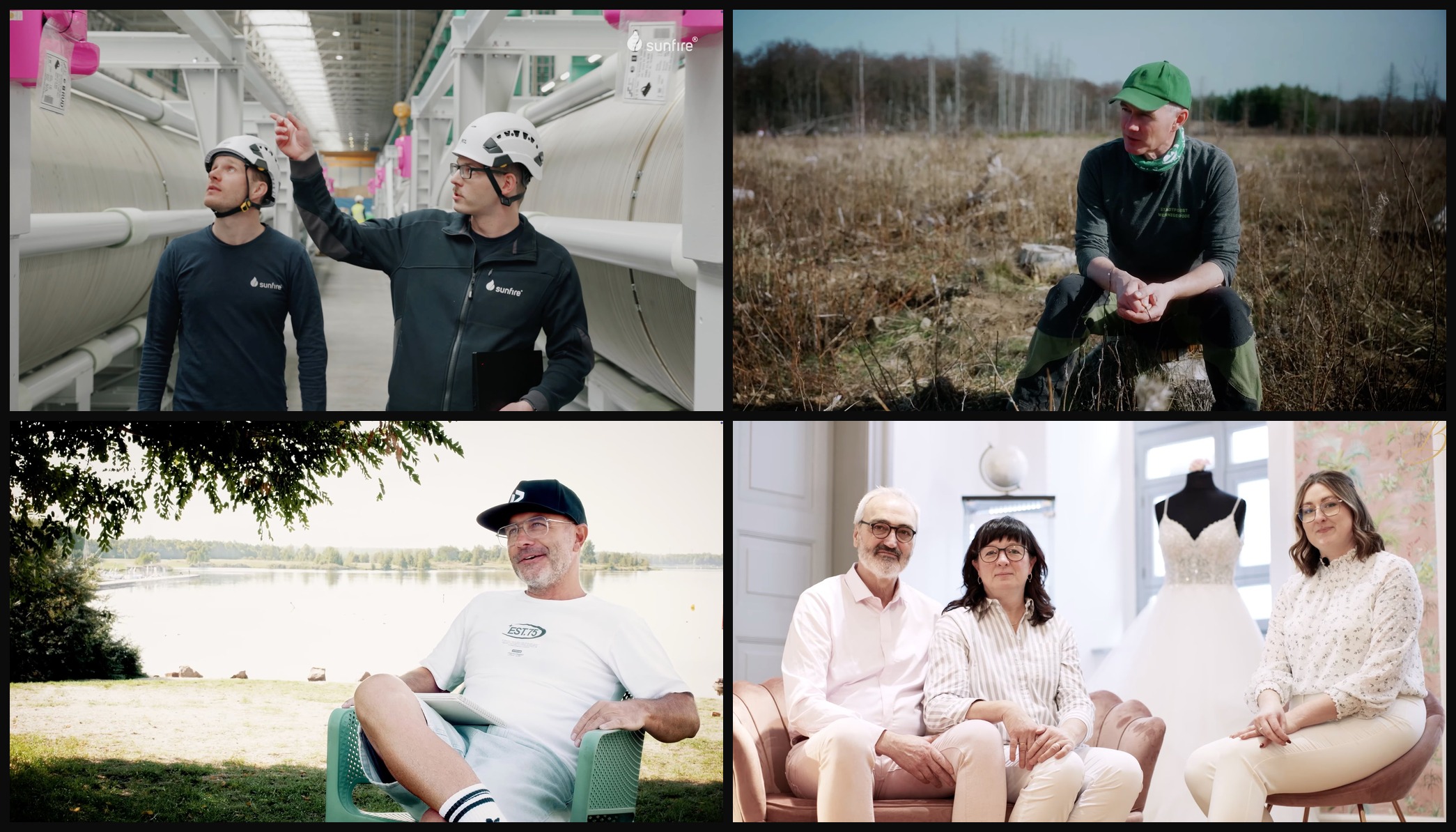
Industrial hall, forest, lake, bridal store — four locations with nothing in common. Except one sentence someone says almost in passing. About the real craft behind every brand film: listening.
In an industrial hall, in the forest, at a lake and in a bridal store. Over three years I've shot in countless places. They don't get much more different.
Sometimes, getting out of the car, I briefly think: none of this fits together. Last week I was standing between two big CNC machines, with ear protection and a helmet and an employee explaining to me why tolerances are most critical on a specific alloy. A week later, three women are kneeling over a lace train, quietly discussing whether the hem is now a touch too long. And yet at both places I end up doing the same thing.
What surprises me every time: the most interesting story is usually one the company already knows. It sits in a subordinate clause someone tosses out almost in passing.
In the briefing call, that sentence rarely comes first. There it's about arguments, target groups, messages, "what we want to communicate". All legitimate. But that's not the material a film is later made from that actually moves something. It happens over coffee. While we set up on shoot day. In the small talk before the interview. That's when the sentence everything hangs on suddenly drops.
"We've actually been doing it this way since my father set this up back then."
"Last year we had an applicant who said she can tell immediately whether a company is honest or not."
"Nothing gets thrown away here. We've got a wedding dress from '98 in the back, because someone once wanted it back."
Sentences like that aren't in the glossy brochure. They aren't in the brand film made by the last agency. They come out because someone forgets for a moment that there's a camera in the room.
And that's where my actual work starts. Not the filming — the listening.
I think that's the difference between a film that looks good and a film that actually triggers something. The good-looking one is made fast. Nice pictures, decent edit, a soundtrack that carries. But it stays interchangeable. It could be about any company in the industry — only the logo at the end would change. What makes it unmistakable isn't the cinematography. It's the one sentence you only hear in that one place.
My job is rarely to invent something. More: to listen well enough to notice — that's it. Sometimes I'll say mid-conversation: "Could we record that again real quick? Exactly what you just said." And people are usually surprised. "That? That's nothing special."
Yes it is. That's exactly it.
Every shoot I learn more about what really defines a company. In the industrial hall it wasn't the machine that cost a seven-figure sum at some point. It was the employee who's been working there for over twenty years and moves his hands while explaining as if he were shaping the workpiece in mid-air. In the bridal store it wasn't the exclusive designer brand. It was the moment when the saleswoman asks the bride the same question for the third time — calmly, without impatience — until the woman in front of the mirror finally says out loud what she actually wants.
The people who work there often know it better than any glossy brochure. They know why customers come back. They know what has quietly shifted in the last few years. They know which story keeps coming up at the summer party. They know where the pride sits and where the embarrassment. Nobody can bring that in from the outside, no matter how good the creative agency is.
All I can do is build a frame in which it becomes visible. A camera that doesn't get in the way. A question open enough that no rehearsed sentence falls out. Enough time that someone can take two breaths before answering. And an edit that doesn't claim, but shows.
Maybe that sounds obvious. It isn't. The easier route would be a different one: develop a concept, lay out a narrative, tell the company how it should come across. That route delivers predictable results. But it doesn't tell the truth about this one company. It tells the truth about all the companies that want to come across like this company. That's a difference.
In the end we make it visible together. They bring the story, I bring the images. My job isn't to make something up, it's to spot the point where the real story shows itself — and then to stay out of the way.
Industrial hall, forest, lake, bridal store. Four worlds that look like they have nothing in common at first glance. And yet in every one of them, someone said a sentence on the shoot day that I couldn't have invented. That no ad agency can invent. That only the people working there every day know.
That's the actual material. Everything else is packaging.
MORE INSIGHTS
Why visibility without trust doesn't move the needle — and how a film builds both
On how reach, trust and an employer brand that actually attracts candidates connect. And why video isn't an end in itself — it's a tool.
WorkflowWhat to think about before you have me produce a film for you
On briefings, budgets and the questions that actually matter.
WorkflowGoodbye SSD chaos — why I rebuilt my storage setup from scratch
Sometimes you suddenly notice that a system isn't growing with your work anymore. On the moment chaos turned into structure — and why a new NAS is my workflow upgrade of the year.