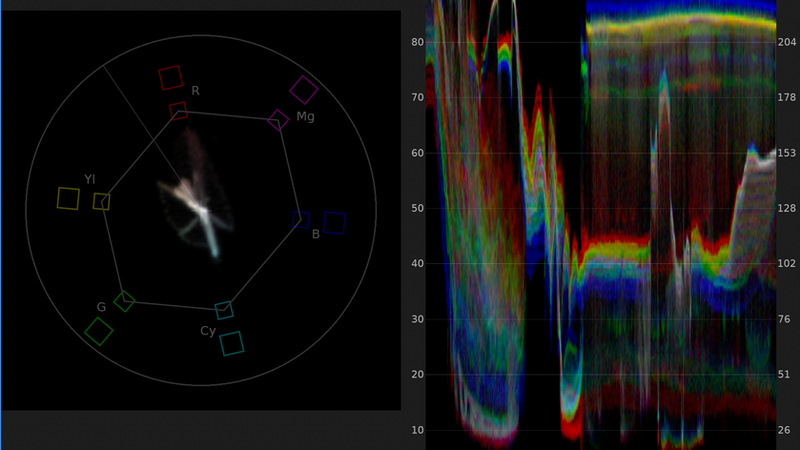
When perfectionism eats more time than it adds quality
On editing decisions, doubt and the moment when good enough really is good. Perfectionism often feels like professionalism — sometimes it's just fear.
Perfectionism rarely starts at the beginning of a project. It sneaks in once everything is basically already there.
Event productions in particular often don't have a rigid script. There's a concept, a rough idea of what should come out in the end, but no shot list that dictates second by second which image goes where. The client deliberately gives me room. Over the course of the day I gather impressions, highlights, moods. Lots of B-roll, lots of movement, lots of moments that can't be repeated.
Interviews are steered by questions, but the answers there are open too. Nobody says exactly what you expect. That's what makes these productions feel alive.
At the end of that day I've got a mountain of material in front of me. One hundred fifty, two hundred, sometimes two hundred fifty gigabytes of video. Different lighting moods, different camera positions, shifting colours, shifting dynamics. Everything waiting to be sorted, judged and put in order.
And that's exactly where my inner conflict starts.
When I build the timeline, I often already see the finished video in front of me. Not concretely, but as a feeling. As rhythm. As dramaturgy. I want every shot to land. Transitions to work. Nothing to break the mood. And at the same time I keep asking myself whether the client will be happy with my choices. Whether this clip is the right one or whether there's a better one.
Then I notice things. One clip is slightly tilted. Another has a slight colour cast. A third needs stabilisation. And suddenly I'm not editing anymore, I'm optimising. I lose time fixing things that aren't on the agenda yet.
The next step would actually be clear. Pick the best shots first. Then set the order. Then cut. Then stabilisation, colour grading, polish. But my perfectionism keeps pulling me forward. I want to see the clip perfect before the video even stands.
Sometimes that also means parting with material. A clip works dramatically but can't be cleanly stabilised. Out it goes. Another is actually strong but a touch too dark or too bright. And instead of moving on, I get stuck. I compare. I test. I doubt.
On top of that comes the technical reality of displays. I work with multiple monitors. A pen display, a viewing monitor. Then there's the phone. An iPhone shows contrast differently from an external screen. A Mac display often feels punchier, with stronger blacks and whites. On a different display the same image suddenly looks too flat or too harsh.
So I export. Watch the video on different devices. Tweak again. Tiny steps. Tint a hair to the left. Saturation a notch down. Highlights shifted by a tenth. And at some point it's two in the morning and I'm moving sliders even though the video has been done for hours.
The same thing happens with motion graphics. Lower thirds, fades, call-to-actions, intros and outros. I know less is more. The focus should be on the content. On the images, the people, the mood. And still I check every detail as if the quality of the entire film were being decided right there.
Rationally I know the client doesn't even notice most of this. A clip is often only one, maybe two seconds on screen. Small softness, minimal colour drift, tiny composition flaws disappear in the overall impression. Especially when rhythm, music and editing are working.
Of course there are differences. If a client invests a serious budget, the bar for fine-tuning is higher than for a small event video with a tight budget. That's completely legitimate. But even there, there's a point where extra effort no longer brings extra quality.
And recognising that point is the real challenge for me.
Perfectionism often feels like professionalism. Truth is, it's sometimes just fear. Fear of handing something off. Fear that someone might spot a flaw you already saw yourself. Fear of not having done enough.
What helps me is experience. Knowing when a video carries. When it's coherent. When the added value of more polishing is approaching zero. And reminding myself that quality doesn't live in the last decimal — it lives in the overall impression.
In the end I often think: I could have spared myself the stress. The video was already really good. Not perfect, but honest, alive and fitting for the job.
Maybe that's the whole point. Perfection isn't a goal, it's a feeling that keeps moving the goalposts. Good work, on the other hand, is tangible. And it happens when you know when it's time to let go.
MORE INSIGHTS
Why visibility without trust doesn't move the needle — and how a film builds both
On how reach, trust and an employer brand that actually attracts candidates connect. And why video isn't an end in itself — it's a tool.
WorkflowWhat to think about before you have me produce a film for you
On briefings, budgets and the questions that actually matter.
WorkflowGoodbye SSD chaos — why I rebuilt my storage setup from scratch
Sometimes you suddenly notice that a system isn't growing with your work anymore. On the moment chaos turned into structure — and why a new NAS is my workflow upgrade of the year.