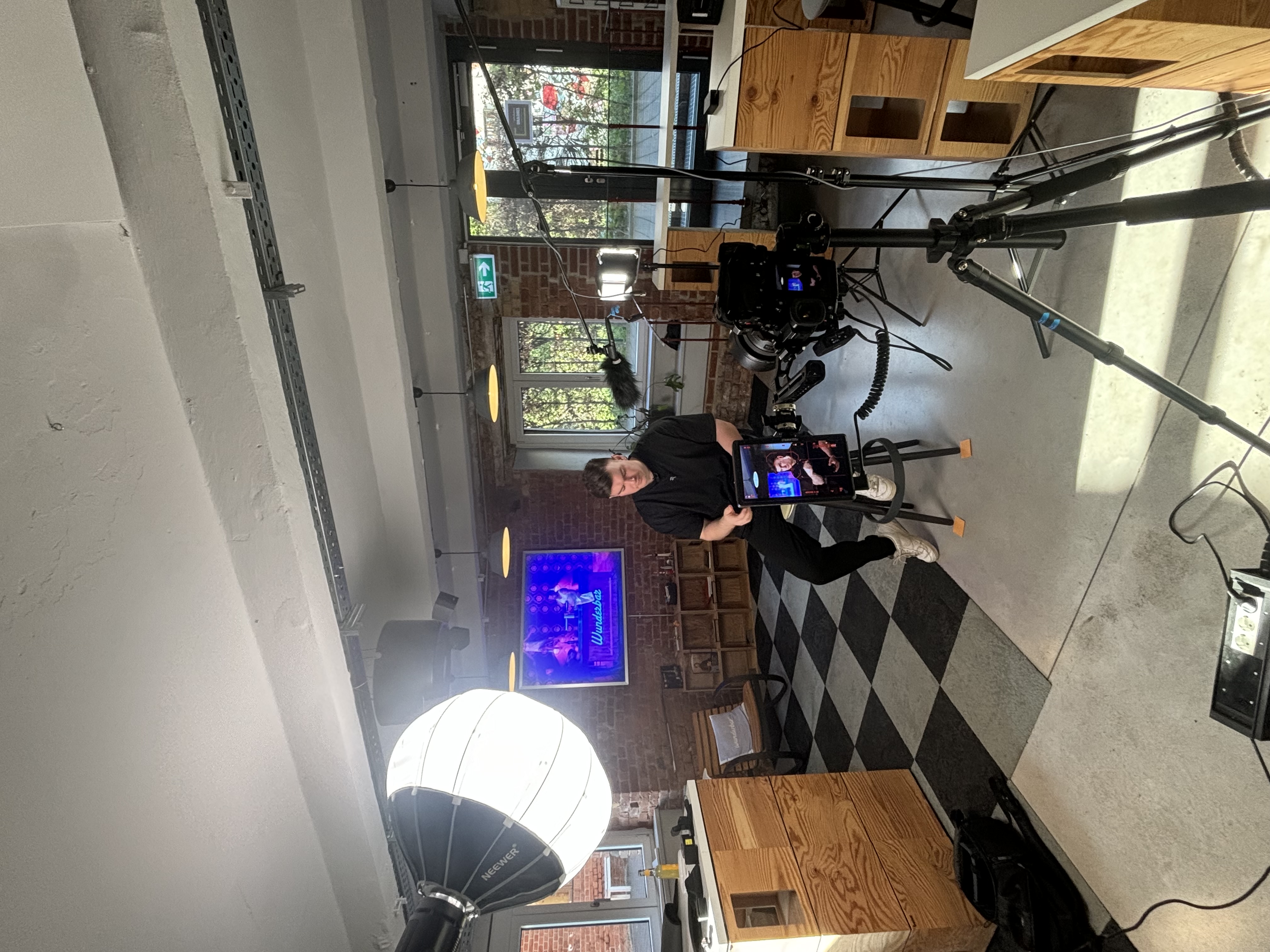
What to think about before you have me produce a film for you
On briefings, budgets and the questions that actually matter.
When someone reaches out to me for the first time, the message is usually short: "Hey Oliver, we'd need a brand film. What does that cost?" I get the question. It's human. Nobody wants to spend hours preparing only to hear in the end that the budget isn't there.
Still, it's the question I find hardest to answer. A brand film can cost a few thousand euros or many times that. Not because I juggle prices, but because there are worlds between those two films — and the difference doesn't start at the equipment, it starts at what happens before. At the thinking.
This post isn't a sales pitch. It's the answer to the question I get asked most often: "What do I actually need to know before I reach out to you?" Here it is.
WHAT'S IT ACTUALLY ABOUT?
The first question is never technical. It's strategic. A film isn't an end in itself. It's a tool. And tools only work when you know what you need them for.
Some clients come wanting a brand film but actually need a recruiting video. Others want a recruiting video and realise during the conversation that their careers page gets no applicants at all because the real problem is two steps upstream. Others want a commercial for a trade show, even though the show is three weeks away and the film isn't the bottleneck — the missing concept behind it is.
So before you request anything, ask yourself:
- What's the film supposed to achieve?
- Who's supposed to see it?
- What should that person think, feel or do afterwards?
Sounds trivial, but it's the most important difference between a film that works and one that just looks nice.
WHO'S IT FOR?
"Target audience" is one of those words that shows up in every marketing book and rarely gets taken seriously in practice. Yet it changes everything — tone, length, platform, visual language, music. A film for young apprentices on TikTok sounds different from a film for CFOs on LinkedIn. That isn't a stylistic choice. That's craft.
If you tell me "basically everyone", that's an honest answer — but it makes the film more expensive and weaker. Weaker, because a film meant for everyone hits no one in the end. More expensive, because I'll need multiple cuts, each with its own hook, length and audio track.
Sometimes that's the right solution. More often, it's enough to focus on one audience and figure out the rest later.
WHERE WILL THE FILM LIVE?
A film running in the hero section of a website looks different from a reel on Instagram. Sounds obvious, but it often isn't in the briefing. Platform determines format, format determines the shoot, the shoot determines budget.
Typical combinations I hear:
- Website and LinkedIn — landscape, 60–120 seconds, calm editing
- Instagram and TikTok — vertical, under 30 seconds, hard hook
- Trade show and reception — landscape, no sound, looping
- YouTube — 5–10 minutes, documentary, with depth
If you want to show the film on the website and on Instagram and on LinkedIn and at a trade show, that's totally fine — but we need to plan for it from the start. Pulling vertical and landscape out of the same shoot works if you think about it on set. After the fact it gets difficult or impossible.
So write me everything you can imagine, even if it feels excessive. We can scale back later. What we can't do: shoot what was missing on the shoot day retroactively.
WHAT'S THERE, WHAT'S MISSING?
Most clients underestimate what they already have. Half an hour clicking through your cloud before you reach out often saves more budget than any negotiation at the end. Check for:
- Logo files and brand guidelines
- Footage from older projects
- Product and location photos
- Old concepts or moodboards
Just as important is what's missing. Is there a concept yet or not? Is there a brand world or do we need to develop one along the way? Do you have someone who can speak on camera, or do we need a voice-over? Those aren't details. Those are the points where projects get faster or slower.
WHAT DOES IT COST?
Now to the question everything starts with. My briefing form asks for a budget range, and I know that throws some people. Nobody likes naming a number before they've seen a quote. I understand. I still ask.
Not to push the price up. To be honest. With a tight budget I won't be producing a cinematic brand film with two shoot days and a drone. With a serious budget I won't be producing a 15-second Instagram snippet. If I know your range, I can offer you the best possible solution within it — or tell you honestly that it doesn't add up and we need to talk about where to cut.
A budget range isn't a price negotiation. It's the basis for making sure the quote you get back is realistic.
BY WHEN?
Time pressure is the most underestimated variable in any project. A film that has to be done in four weeks costs differently from one we have three months for. Not because I charge rush fees, but because the workflow changes — fewer feedback rounds with you, fewer options in the edit, less leeway for weather or sick people on shoot day.
If there's an external deadline — a trade show, a launch, an anniversary — tell me early. Sometimes it's the most important point in the whole brief.
WHO DECIDES?
This is a question I learned to ask after not asking it too many times.
- You decide alone — the project runs fast.
- You decide together with colleagues — we structure feedback rounds differently.
- A senior sign-off at the end — a finished film can suddenly get overturned again.
None of that is bad. It happens. But it can be planned for — if you know it in advance.
WHAT YOU DON'T NEED TO BRING
I often hear things like "I don't have a finished concept yet, I'll get back to you later." Please don't. Concept is my job. You don't need to bring storyboards, no shot list, no idea what the first sentence should sound like.
What you should bring is an honest answer to the questions above:
- Goal
- Audience
- Platform
- Budget range
- Timing
I develop the rest with you. That's what I'm here for.
WHAT HAPPENS NEXT
Filling out the briefing form takes about four to six minutes. You don't need to know everything. Where you're unsure, just say so. Better a "don't know yet" than a wrong answer we have to unpick later.
I get back to you within 48 hours. Sometimes with a concrete quote, sometimes with follow-up questions, sometimes with a suggestion to jump on a 30-minute call first. What makes the most sense depends on how far along you are — and that's one of the questions in the form too.
In the end it isn't about you showing up perfectly prepared. It's about us working together on something that actually works for you. The briefing is the first step toward that, not an obstacle.
MORE INSIGHTS
Why visibility without trust doesn't move the needle — and how a film builds both
On how reach, trust and an employer brand that actually attracts candidates connect. And why video isn't an end in itself — it's a tool.
WorkflowGoodbye SSD chaos — why I rebuilt my storage setup from scratch
Sometimes you suddenly notice that a system isn't growing with your work anymore. On the moment chaos turned into structure — and why a new NAS is my workflow upgrade of the year.
MindsetWhen perfectionism eats more time than it adds quality
On editing decisions, doubt and the moment when good enough really is good. Perfectionism often feels like professionalism — sometimes it's just fear.